
It all started at 3:43 PM in the Starbucks parking lot. My daughter was inside having coffee with her friends and I was sitting in the car waiting for her.
After a few minutes of doom scrolling, I went back to Jeeves – my AI butler based on OpenClaw – and started going through my routine.
OpenClaw is a personal AI assistant that runs on your own machine and talks to you through Telegram, like texting a friend.
10 minutes through, and while we were going through my emails and tomorrow’s plan I had a random thought – can Jeeves help me with stocks? I never understood those stock charts and candles and such, and I had written it off as something I can’t do.
The idea was pretty simple: find me something good to invest in and tell me when to buy and sell. Like a standby financial advisor, or a poor man’s private equity.
And not to my surprise, it pushed back with something like, “are you crazy? You’re going to give me your money? I’m not reliable for that.” But after a bit of pushing it offered me the next best thing: to build a system that watches the market, spots signals, and sends me alerts — and if I wanted, it would also do the analysis and walk me through what it found.
So I accepted this compromise, and it said “okay, give me a few minutes to put a solution together.”
Ten minutes later, while we were talking about something else, it sent me a full breakdown — what tools are out there, what each one costs per month, what you’re giving up with the free options, and its recommendation on where to start. We discussed it, swapped some pieces in and out, improved a few things, and then it went off to build it.
Now, I’ve been in the software business for over 25 years building systems and architecting them, and I know how this process works start to end. But before, building something like this would have meant clearing my schedule for a few days, sitting at my desk with two monitors — and all this after spending a few weeks learning Python first, because I don’t know Python.
This time I was in my car, sipping my coffee, with just an iPhone as my only tool, in a Starbucks parking lot.
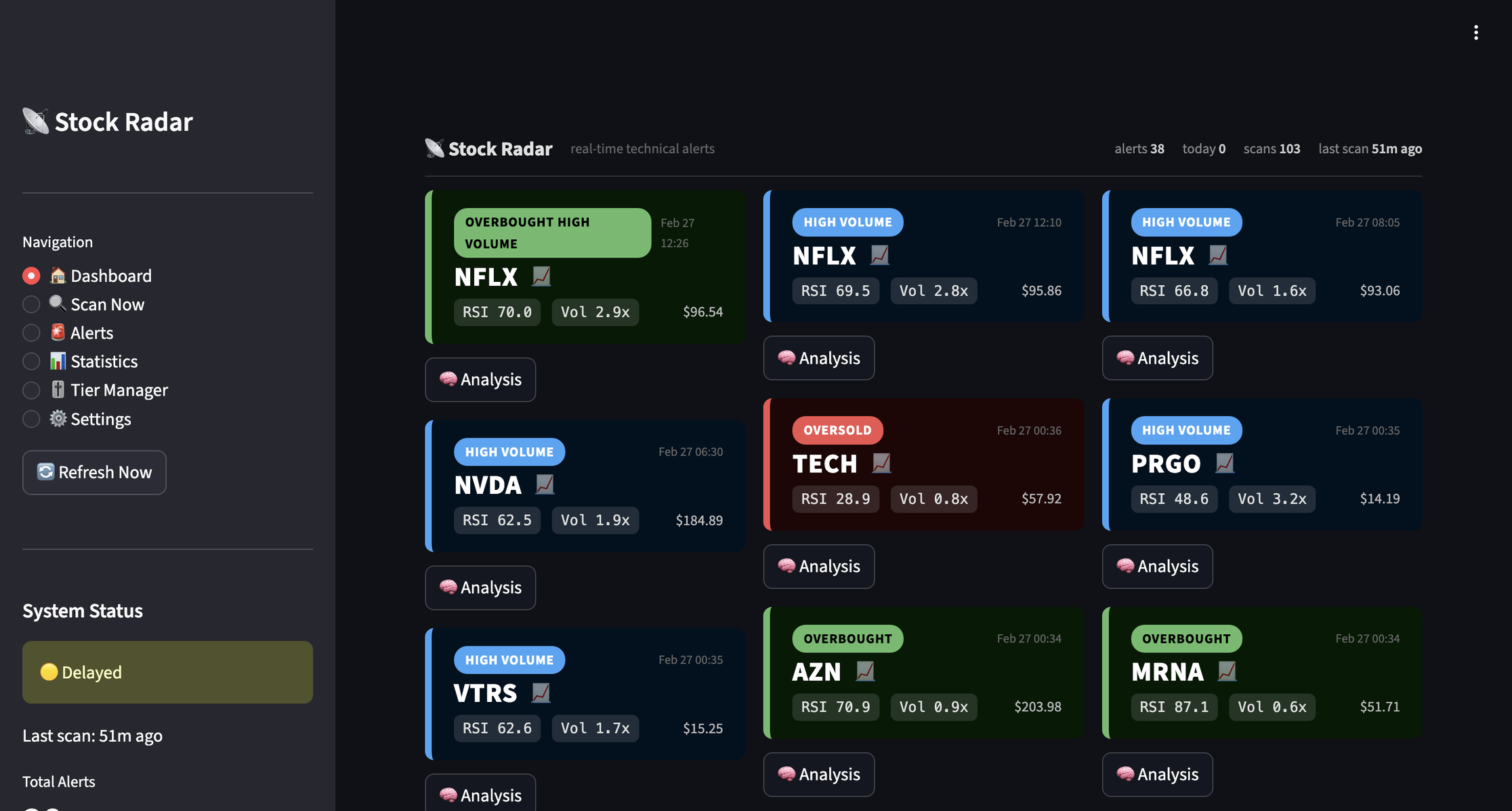
It got to work and built the first version of the scanner working with live data, a dashboard, connected everything to Telegram so it could send me alerts, tested it, fixed a few errors, and pulled in Yahoo Finance for free market data. Twenty minutes later I had a working solution, and all I had done was tell it what I needed and answer a few questions along the way.
Then I just kept asking for more. We added alert dashboards, deduplication, AI analysis, live news to feed the analyzer, scoring, a database for storing alerts, and went through a few rounds of rebuilding the dashboard until the visuals felt right. By the time my daughter walked out at 6:30 — teenagers can talk, for 3 hours, in a Starbucks 🙂 — the system was running, alerts were coming in, and I had a link to check the dashboard.
And I still hadn’t seen the code.
By 11 PM I had a running system deployed to the cloud with real-time stock info. From a parking lot to a live system in the cloud in 8 hours.
And I still haven’t seen the code.
Everybody talks about gaining efficiency using AI but this wasn’t about moving faster. AI removed the thing that stopped most of my ideas from becoming real in the first place — the gap between thinking of something and actually being able to build it.
What I made isn’t ready for a production environment at a big company — a real engineering team would need to go through a lot of it before that — but that wasn’t my goal. I wanted something, had an idea, and I built it the way I wanted it to work, in time I would have otherwise wasted.
There are tons of solutions out there that do this, but they do a lot more than I need, cost more than I want to pay, or do things in a way I don’t like. It’s like having a favorite movie on Netflix but not liking one particular scene — and then being able to change that scene to exactly what you want. That’s where I see the software business going.
And to be clear, I still needed to know how a software system works, what database is right for what I need, and what decisions to make. This isn’t just idea to execution for everyone yet.
But what comes after this? It will be.
Think about what that means for the software industry. There’s going to be a wave of ideas that actually get off the ground, built and tested by people who never could have done it before, and the ones that stick will go on to become real production-grade tools.
And that’s exciting.